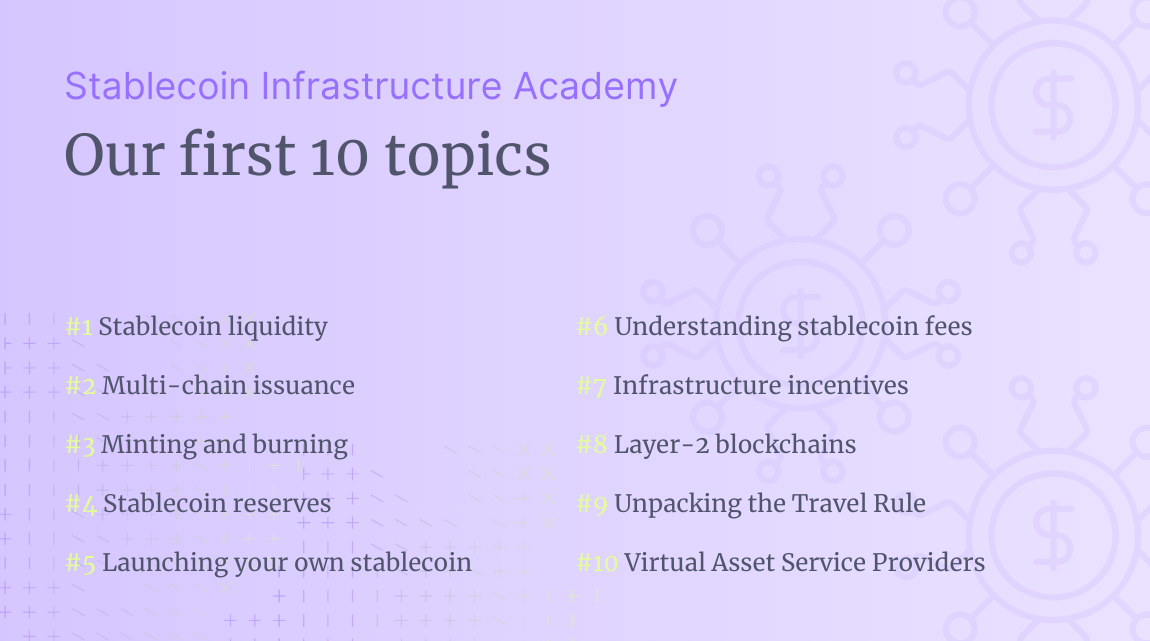
Over the last 10 weeks, we’ve been sharing detailed explainers on different technical aspects of stablecoin payments infrastructure to mark the launch of our Buyer’s Guide: Stablecoin Payment Infrastructure product (learn more about purchasing a subscription or read the executive summary). Here’s what we’ve covered so far:
- Stablecoin liquidity: What it is and why it matters – How both market liquidity and capital liquidity create challenges for stablecoin-based cross-border payments, and how they can be managed.
- Not all USDC is equal: Understanding multi-chain issuance – Why the same stablecoin is different when issued on different blockchains, and how that can impact their use for payments.
- Mint and burn: How stablecoin creation and redemption works – The process by which new stablecoins are made and redeemed and key lessons from the PYUSD accidental minting incident.
- Understanding stablecoin reserves and how they are managed – What makes up the reserves that underpin the most widely used stablecoins, why that matters and how it can impact compliance.
- Launching your own stablecoin: How, why and why not – Digging into the technical process of issuing a stablecoin, and under what circumstances it does and doesn’t make sense to do so.
- Stablecoin fees: Understanding on-chain transaction costs – Where costs are incurred when moving money using stablecoins, who takes a cut at what stage and how this can vary.
- How incentives impact stablecoin infrastructure choices – Unpacking the variety of incentives used by different blockchains and stablecoins, the role they play and who can benefit.
- Understanding Layer-2 blockchains: The role of rollups – How Layer-2 blockchains differ from ‘default’ Layer-1 alternatives and how they can provide speed and cost benefits for payments.
- Unpacking the Travel Rule: Stablecoin cross-border payments’ evolving reporting requirements – How stablecoin-based cross-border payments comply with AML regulations, and how this is changing.
- Virtual Asset Service Providers: Where and when VASP licences matter for stablecoin payments – The common licensing frameworks for stablecoin cross-border payments providers and where they apply.
In the new year we’ll be back with more stablecoin explainers, as well as some other explainers on the wider industry, while FXC Buyer’s Guide: Stablecoin Payments Infrastructure is now available to license via subscription. Learn more about out how it can help you select the right partners for your stablecoin infrastructure and understand how best to build an infrastructure stack to meet your needs.